
Leading HR Voices - Looking ahead to 2026
What will HR managers need to focus on in 2026 in order to be effective?
According to Gartner, four topics will be at the center of the HR agenda for 2026. These include:
AI in HR processes
Work design in human-machine collaboration
Mobilizing leadership for growth in uncertain times
Cultural design amid declining belonging and identification.
We wanted to know how HR experts assess these trending topics and what specific courses of action they see. In our series Leading HR Voices – Looking Ahead to 2026 , four personalities from the fields of practice and research share their assessments.
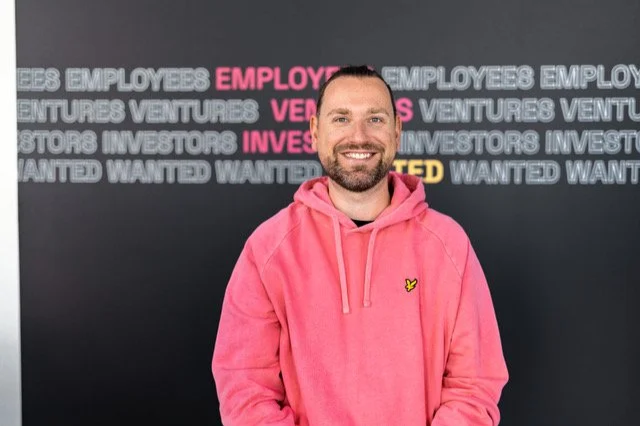
“HR is at a turning point: moving away from administrative excellence toward architectural responsibility for work, leadership, and culture. AI is accelerating this development—but people continue to determine the direction.”
Benjamin Visser - Founder and CEO of allygatr
Benjamin Visser is the founder and CEO of allygatr, the Berlin-based company builder and VC for HR tech solutions. His work combines entrepreneurial thinking with strategic HR expertise. For our series, he shares his perspectives on the four key areas of focus for HR this year.
1. How can HR teams revolutionize their work with the help of AI without losing their humanity?
AI is not a substitute for relationships, but rather a way to free up more time for them. The key is to consistently use AI for routines, pattern recognition, and forecasts—and invest the time saved in dialogue, coaching, and individual support. Humanity is not lost when machines make decisions, but when people stop taking responsibility. HR must therefore remain the curator: Who decides what – and why? Transparency, ethical guidelines, and explainable AI are not "nice-to-haves," but prerequisites for trust."
2. What does good work design mean in an era where machines think for themselves?
Today, good work design means designing work in such a way that human strengths come into play where machines reach their limits—in creating meaning, creativity, judgment, and relationship building. This requires a shift from job descriptions to competency architectures: Which tasks does AI perform better, faster, and more scalably—and where are conscious human decisions needed? Work is becoming more fluid, roles more temporary, and learning continuous. Good work design does not create maximum efficiency, but sustainable performance."
3. How can managers be mobilized for growth—despite uncertainty, pressure, and ambiguity?
“Growth does not come from control, but from orientation. Today's leaders need fewer answers and more inner stability. This can be achieved when organizations systematically build psychological security: through clear reasons, genuine decision-making freedom, and the courage to prioritize learning over mistakes. Development programs must move away from idealized leadership models and toward spaces for reflection: How do I deal with ambiguity? Where am I holding on too tightly? Growth always begins with the leader's self-image."
4. How can culture be actively shaped when belonging, trust, and identification are crumbling?
Culture is not a feel-good program, but the result of consistently implemented decisions. Belonging arises where people experience that behavior counts—not just value posters. In fragmented working environments, culture needs clear social contracts: How do we deal with performance, conflicts, diversity, and power? Managers are the key cultural ambassadors—not through words, but through daily micro-decisions. Today, cultural work means fewer campaigns and more consistency."

“Culture cannot be proclaimed, it must be experienced.”
Felicitas von Kyaw – former CHRO at Vodafone and Coca-Cola Europacific Partners
Felicitas von Kyaw, former Managing Director of Human Resources and Director of Labor Relations at Vodafone and Coca-Cola Europacific Partners, and founder of The Change Shapers. She has been driving change at the C-suite level for more than 30 years—in startups, consulting firms, and international corporations. As a long-standing member of the executive board of the Federal Association of Human Resources Managers (BPM), she has played a key role in shaping the evolution of modern human resources management in Germany.
1. How can HR teams revolutionize their work with the help of AI without losing their humanity?
"By consistently using AI as an amplifier, not a replacement. It takes care of routine tasks, creates transparency, and increases speed. This makes human work in HR more valuable: judgment, relationships, decision-making. Humanity is not lost when leadership retains responsibility and consciously shapes areas where people remain irreplaceable."
2. What does good work design mean in an era where machines think for themselves?
“Work is being redistributed: between humans, machines, and both together. Without technology, value creation is virtually impossible. Good work design means actively shaping this partnership and systematically building AI-human competence so that both sides can play to their strengths.”
3. How can managers be mobilized for growth—despite uncertainty, pressure, and ambiguity?
Leadership is understood as an attitude, not as a knowledge advantage. People follow people. Growth occurs when leaders provide guidance, even without having all the answers. Honesty about not knowing, clear decisions, and good self-management create trust. In this way, uncertainty is not resolved, but rather kept sustainable together.
4. How can culture be actively shaped when belonging, trust, and identification are crumbling?
“Culture cannot be proclaimed, it must be experienced. It grows where meaning and direction are clear, where people experience genuine participation, and where progress is visible. When the path is experienced as jointly feasible, a sense of belonging and identification arises naturally—not through appeals, but through experience.”
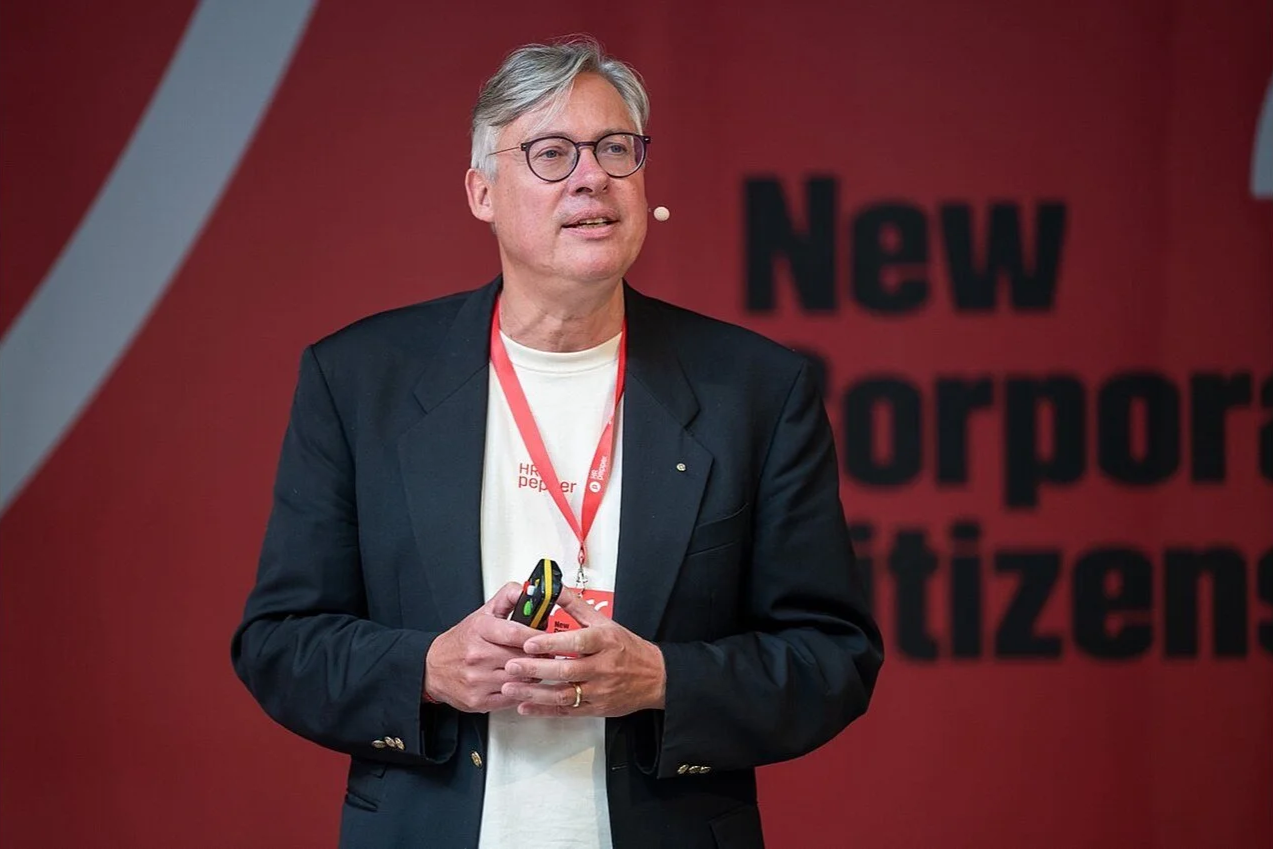
Depending on the assigned role, human activities in HR will decline significantly in terms of quantity.
Dr. Matthias Meifert – Founder and Managing Director of HRpepper
Matthias Meifert is the founder and managing director of HRpepper, ranked number one in the brand eins ranking of the best management consultancies for HR and change management. For over twelve years, he has been listed by personalmagazin as one of Germany's leading HR minds. He focuses on the question of how organizations can be designed in such a way that commitment does not have to be demanded, but arises naturally.
1. How can HR teams revolutionize their work with the help of AI without losing their humanity?
The idea of revolutionizing HR with AI while preserving humanity seems like trying to square the circle. AI already permeates all HR processes, whether in a preparatory, supportive, or even decisive role. Depending on the assigned role, human activities in HR will decline significantly in terms of quantity. This will result in new requirements for HR.2. What does good work design mean in an era where machines think for themselves?
Firstly, humanity must be redefined through clear standards for non-discrimination, reliability, and transparent fairness.
Secondly, HR needs new roles such as AI product owners, ethics and culture guardians, and change architects with a clear mandate.
Thirdly, the use of AI requires binding governance with defined taboo zones and human-in-the-loop for critical decisions. Fourthly, the guiding principle is: automate transactions, intensify relationships, and prioritize integrity over efficiency.
2. How can managers be mobilized for growth—despite uncertainty, pressure, and ambiguity?
Good work design in the age of intelligent machines means making people more the subject and less the object of technological logic. Machines recognize patterns, but they don't know "why," so work must create meaning and not just output. Routines should be radically automated, decision-making scope expanded, and algorithmic results used as an opportunity for reflection. Productivity does not arise from the tandem of humans and machines, but from the triad of humans, machines, and reflection, combined with the uncomfortable question of which tasks we would be better off eliminating rather than digitizing."
3. How can managers be mobilized for growth—despite uncertainty, pressure, and ambiguity?
Mobilizing managers for growth in unstable times requires clear communication and a robust framework for orientation. Three levers are crucial: psychological security to address fears of loss, strategic focus with clear priorities and non-goals, and personal meaning through concrete development promises. Central to this is the permission to lead by hypothesis, i.e., to test, reject, and learn. Leadership thus becomes less about heroism and more about curating learning spaces with an economic North Star."
4. How can culture be actively shaped when belonging, trust, and identification are crumbling?
Actively shaping culture when belonging and trust are eroding means going where culture is decided, in micro-moments rather than in mission statements. Belonging arises in communities and peer learning, not in all-hands formats. Trust grows through transparency about unreasonable demands and naming asymmetries, rather than through promises of harmony. Identification requires updated narratives that address the question of what is worth investing energy in today. Cultural work in times of crisis means making decisions in a way that reveals who we want to be and what we are willing to lose in order to achieve that.”
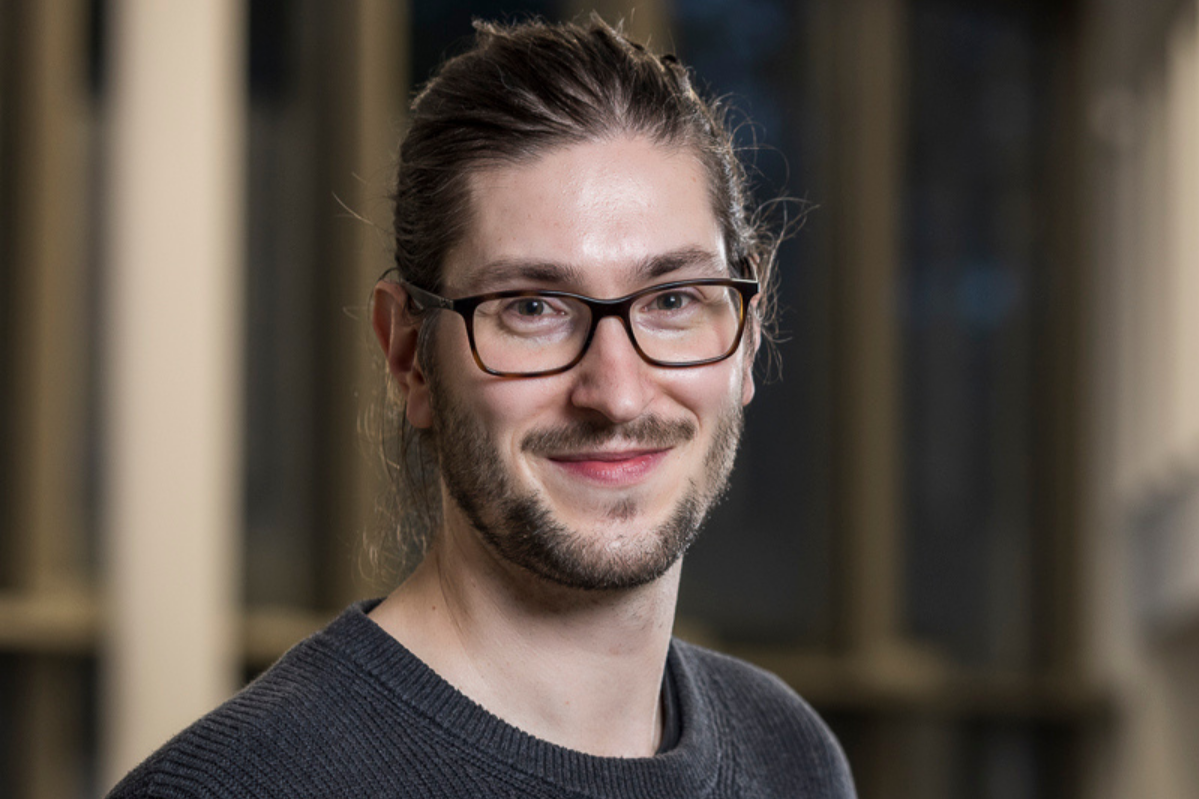
"Used intelligently, AI can stimulate human interaction, but not if it is seen as a substitute for interaction with colleagues."
Prof. Dr. Markus Langer - Professor of Work and Organizational Psychology at the University of Freiburg
As a professor of work and organizational psychology at the University of Freiburg, Markus Langer brings a scientific perspective to the table. His work focuses intensively on AI-based decision-making processes, explainable AI, and human oversight in algorithmic systems.
1. How can HR teams revolutionize their work with the help of AI without losing their humanity?
“One important insight here is certainly that AI is not the solution to all problems and that teamwork may even become more complicated if we add an AI system as another player. Used intelligently, AI can stimulate human interaction—but not if it is seen as a substitute for interaction with colleagues. Instead of viewing automation as a goal in itself, we should be aware that without our own expertise, without human input, and without the integration of different human expertise and perspectives, something will ultimately be produced—but only "something" and not "something extraordinary."
2. What does good work design mean in an era where machines think for themselves?
Above all, it means filling "human-centeredness" with real meaning. Machines are helpful, useful, and beneficial, and should remain so, rather than roles being reversed and us waking up in workplaces where we serve AI, have to adapt to it, or cannot control how we use it. Expanding human autonomy and skills and contributing to meaningful social relationships can be drivers of good AI implementation in the workplace. At the same time, AI must always be thought of in socio-technical terms: its introduction changes not only a technology, but also the interaction between people, machines, and organizations."
3. How can managers be mobilized for growth—despite uncertainty, pressure, and ambiguity?
Uncertainty, pressure, ambiguity—that sounds stressful. It can help to reflect on why you are exposing yourself to this and to remind yourself of the significance of your own contribution. Perhaps this will also help you to reframe uncertainty, pressure, and ambiguity. If these three factors are present, conditions for change may even be favorable: ambiguity means there are arguments in different directions that can be considered together; if I am uncertain, others are too; and if there is pressure, many may be aware of the urgency of the situation, so there is a willingness to change that can be translated into action and growth."
4. How can culture be actively shaped when belonging, trust, and identification are crumbling?
“A promising idea is to actively seek responsibility and think about culture in terms of responsibility. Instead of handing over responsibility, even to opaque and uncontrollable AI, it is beneficial for individuals and for cohesion in teams, organizations, and society to consciously take on responsibility. If you seek responsibility, you will also find more meaning in your job. When you take on responsibility together, it creates cohesion, commitment, and a culture of mutual trust and identification through responsibility.”
Do you want to strategically anchor business coaching?
Then book a demo call now and find out how coaching can have a real impact in your organization.
